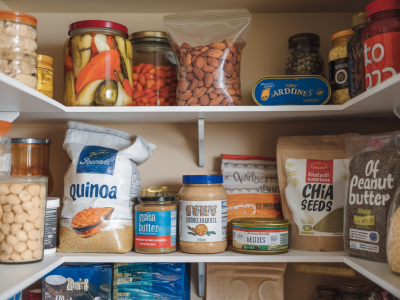
I used to be the person who’d pad to the kitchen at 2 a.m., flick on the fridge light and convince myself a handful of cereal or a spoon of peanut butter was the only thing standing between me and another hour of sleeplessness. Over time I noticed those late-night snacks didn’t help my sleep and often left me feeling worse the next day — heavier, a little bloated, and still wired. What changed was shifting from impulsive grazing to a simple, three-step stabilising snack plan that supports both blood sugar and calm nervous-system signals. I’m sharing that plan here, with practical ideas and gentle troubleshooting, so you can try something that’s realistic and kind to both body and mind.
Why late-night fridge raids happen (and why they’re rarely just “hunger”)
Before we talk tactics, it helps to know what’s usually going on. Nighttime eating often has several drivers at once:
- Blood sugar dips: If your last meal was small, high in refined carbs, or many hours ago, your blood sugar can drop overnight and trigger cravings.
- Stress and arousal: Anxiety releases stress hormones like cortisol and adrenaline that can make your body seek quick energy or soothing oral behaviours.
- Habit and environment: Fridge light, available snacks and routines condition us to expect food as a comforting cue at night.
- Sleep fragmentation: Waking between sleep cycles can cause a sense of alertness or hunger that’s more about resetting than true caloric need.
Understanding these helps us choose snacks that stabilise blood sugar, support sleepy physiology, and feel satisfying without being disruptive to digestion or sleep quality.
The three-step stabilising snack plan
This plan is intentionally simple and repeatable: it focuses on timing, composition and ritual. Each step aims to calm the nervous system, stabilise blood sugar and help you return to sleep with minimal digestion-related disruption.
Step 1 — Pause and assess (2–5 minutes)
When you wake and feel the pull to eat, pause. I’m serious — don’t make the trip to the fridge yet. Try this micro-routine:
- Stay in bed for 60–120 seconds and take three slow, diaphragmatic breaths (inhale 4 seconds, exhale 6 seconds).
- Ask yourself two quick questions: “Am I physically hungry?” and “Is my throat or stomach actually empty?” Often the answer is a mild, vague sensation rather than genuine hunger.
- If you suspect thirst, have a small glass of water or herbal tea (chamomile or rooibos are nice at night).
This pause often interrupts the automatic reaction to get up and snack. If the sensation fades, try returning to sleep. If it persists — or you feel shaky, lightheaded, or genuinely hungry — move to step two.
Step 2 — Choose a stabilising snack (small, balanced, sleep-friendly)
The goal here is to combine a little protein or fat with a slow-release carbohydrate and a calming element. Aim for about 100–200 calories — enough to address a blood sugar dip but not so much it triggers digestion-related sleep disruption.
Effective combinations include:
- Greek yogurt (plain, unsweetened) + a few berries + crushed nuts — protein + slow carb + healthy fat
- Wholegrain toast + mashed avocado + a sprinkle of seeds — complex carbs and fats that digest slowly
- Small banana + a tablespoon of peanut or almond butter — natural sugars with protein/fat for balance
- Cottage cheese with sliced peach or pear — cottage cheese contains casein, a slow-digesting protein
- A warm mug of milk (dairy or fortified oat milk) + a teaspoon of honey — comforting, with tryptophan and carbohydrate to help melatonin synthesis
- A handful of whole-grain crackers + a small slice of cheese — convenient and balanced
Portion control matters. The aim isn’t to replace a meal but to stabilise until morning. I keep small, measured portions ready in the fridge — single-serving Greek yogurt pots, pre-sliced apple with lemon, or hard-boiled eggs — so I don’t overdo it when half-asleep.
Step 3 — Use a small, calming ritual to return to sleep
How you eat matters. Aim to make the snack a brief, mindful pause rather than a full waking event.
- Sit or stand in dim light — avoid bright kitchen lights and screens.
- Eat slowly, with 5–8 mindful chews per bite. Notice textures and flavours — this signals to your brain that the body is being nourished.
- After the snack, do a grounding breathing exercise (4-6 minutes): inhale 4, hold 2, exhale 6. This calms the nervous system and encourages sleep hormones to rebound.
- Return to bed within 10–15 minutes of the snack. If you’re still awake after 20 minutes, repeat the breathing until sleepiness returns.
These steps help shift the focus from “I need to eat” to “I’m providing a small, supportive reset to help my body rest.”
Sample night-time snack ideas by preference
| Preference | Snack (approx. portion) |
|---|---|
| Plant-based | Oat yogurt (120g) + 1 tbsp ground flax + 4 raspberries |
| Low-carb | 2 slices turkey or chicken breast + 6 olives |
| Comforting/warm | 150ml warmed milk with 1 tsp honey |
| Quick grab | Small banana + 1 tbsp almond butter |
| Sweet tooth | 100g cottage cheese + a few slices of peach |
Troubleshooting common night-snacking scenarios
If you try the plan and still find yourself repeatedly raiding the fridge, here are practical tweaks based on patterns I’ve seen with clients and readers:
- Frequent wake-ups with intense cravings: Increase protein/fat at dinner (e.g., add salmon or lentils) and include a small protein-rich snack before bed like a boiled egg or a spoonful of cottage cheese.
- Waking wired and can’t return to sleep: Practice a 10-minute relaxation routine early in the evening (progressive muscle relaxation or a short body scan) to downregulate before bed.
- Habitual grazing triggered by boredom: Move the snack options out of sight at night (opaque containers, keep snacks in a high cupboard) and create a non-food “soother” — warm water with lemon or a lavender pillow spray.
- Mornings with low energy despite eating at night: Check total evening calories and alcohol intake — heavy late meals or alcohol can fragment sleep and reduce sleep quality.
Practical tips to make the plan stick
- Prep small, single-portion snacks once or twice a week so you don’t over-serve in the moment.
- Keep a small notebook by the bed for “worry dumping” — sometimes night eating is a symptom of an active mind. Writing down the worry can reduce the urge to soothe with food.
- Use soft, warm lighting in the kitchen (a plug-in nightlight) to avoid bright stimulation if you do get up.
- Consider blood sugar testing if your nighttime hunger is severe or accompanied by faintness — frequent dips may deserve medical attention.
Changing a pattern takes patience and small wins. I still have an occasional late-night nibble, and that’s okay — the aim isn’t perfection but learning how to respond in ways that support sleep and wellbeing. Try the three-step plan for a week, notice how your body and sleep respond, and adapt the snack choices until they feel right for you.