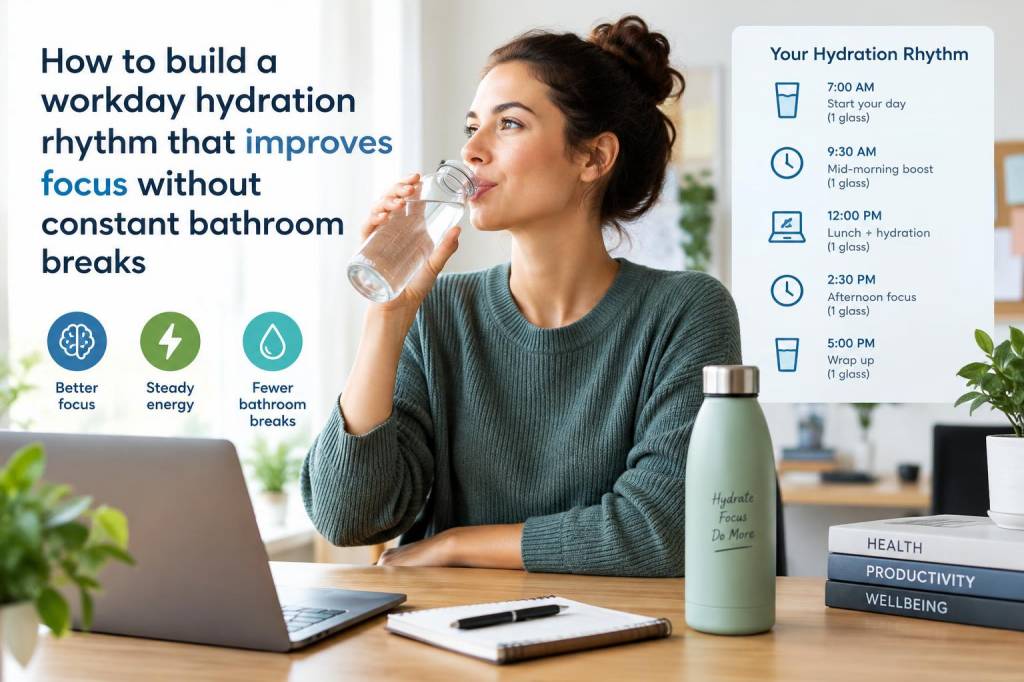
I used to think hydration was simple: drink more water, feel better. In real work life, though, it rarely feels that tidy. If I sip too little, I get foggy, tired, and oddly irritable. If I drink too much at once, I spend half my day running to the restroom and interrupting my concentration every twenty minutes. Over time, I realized that focus does not come from chugging water. It comes from building a steady hydration rhythm that supports energy without flooding my schedule.
What changed everything for me was treating hydration like part of my workday structure, not an afterthought. I stopped waiting until I felt parched, and I stopped using a giant bottle as a challenge to finish by noon. Instead, I began thinking in smaller, timed opportunities to drink, matched to my meetings, breaks, commute, and natural dips in attention. That shift made hydration feel calmer, easier, and much more effective.
Why steady sipping works better than sudden bursts
When I drink a large amount of water all at once, my body responds quickly. That can be useful after exercise or on a very hot day, but during a desk-based workday it often creates a different problem: urgency. A single large bottle emptied in a short time can lead to frequent bathroom trips, and that disrupts deep work, meetings, and even simple tasks like replying to email.
Steady sipping gives my body more time to absorb what it needs. It also helps me avoid the cycle of waiting until I feel thirsty, then overcorrecting. Mild dehydration can show up as low energy, dry mouth, headaches, or that strange sense that my mind feels slower than usual. On the other hand, overdoing fluids can leave me distracted by constant breaks. A rhythm sits between those two extremes.
I also notice that hydration feels more helpful when it is linked with routine moments: after I wake up, when I sit down to start work, before lunch, mid-afternoon, and after the workday ends. Those touchpoints keep me consistent without forcing me to monitor every sip.
My workday hydration rhythm
I do not follow a rigid rule every day, because meetings, weather, travel, and movement all change my needs. Still, I rely on a basic pattern that keeps me focused and reduces restroom interruptions:
- A glass of water soon after waking, before coffee
- Small sips during the first work block, rather than a full bottle
- Another glass around mid-morning, especially if I have spoken a lot
- Water with lunch, but not so much that I feel weighed down
- Regular sips in the afternoon, when concentration often dips
- A final drink toward the end of the workday, then I slow down before evening
This rhythm works because it spreads intake across the day. I am not trying to “catch up” with hydration in one sitting. I am simply maintaining it. That approach has been far kinder to my energy and my calendar.
What I drink, and what I avoid loading into one moment
Plain water remains my main choice, but I have learned that hydration is not only about water volume. Warm herbal tea, diluted fruit-infused water, and brothy soups can all help contribute to fluid intake without the same rushed feeling I get from gulping a huge glass. On especially busy days, I sometimes choose lightly flavored sparkling water if it helps me drink more regularly, although I keep an eye on anything that makes me feel bloated.
I am also more careful with caffeine than I used to be. Coffee is not the enemy, but I do notice that several strong cups early in the day can make me feel more dehydrated and more likely to make frantic bathroom trips. Now I pair coffee with water instead of replacing water with coffee. That small adjustment has made a real difference.
Electrolytes can also be useful in certain situations, especially after exercise, on very hot days, or if I have been sweating a lot. I do not use them constantly, but I appreciate them when plain water alone does not seem to restore my balance. For me, the point is not to chase every trend; it is to notice what my body is actually asking for.
How I avoid the bathroom-break spiral
There is a difference between being hydrated and being overfull. I learned this through experience. If I sit at my desk and drink a full bottle within fifteen minutes, I almost always pay for it later. Instead, I use a few habits that help me stay comfortable and focused:
- I sip slowly instead of finishing water in a rush
- I drink more during natural breaks, not right before a meeting
- I avoid using a giant bottle as a challenge or a deadline
- I pay attention to earlier hydration so I do not arrive at midday parched
- I shift larger drinks to moments when I can step away more easily
I also try to be honest with myself about timing. If I know I have a long presentation, a back-to-back meeting block, or a commute with limited restroom access, I adjust my intake in advance. That is not restriction; it is planning.
Signals I use to notice whether I need more or less
Hydration needs vary from person to person, and they change from day to day. Rather than trying to hit a perfect amount, I check in with a few simple signals. If my mouth feels dry, my energy dips, or my thinking feels sluggish, I usually need a bit more fluid. If I am already making frequent trips to the restroom and my urine is very pale, I may be drinking more than I need in that moment.
I also watch my body during and after meetings. If I talk for long stretches, I often need more sips because speaking can dry me out. If I am sitting still for hours, I may forget to drink, and then my focus drops without warning. Movement reminders help here. Every time I stand, stretch, or refill something, I use that as a cue to take a small sip rather than waiting until I feel bad.
Hydration is not a performance metric for me. It is a support system. I want to feel steady, not obsessed.
Simple ways I make hydration easier at work
I have found that the environment matters almost as much as the water itself. If my bottle is hidden in a bag, I forget it. If it is too large and heavy, I avoid carrying it. If it is easy to open and pleasant to use, I drink more naturally. Little design choices really do matter.
| Workday situation | My adjustment | Why it helps |
|---|---|---|
| Long meeting block | Drink before it starts, then sip after it ends | Reduces mid-meeting interruptions |
| Desk work morning | Keep a small bottle within reach | Makes sipping automatic |
| Afternoon energy slump | Pair water with a short walk | Refreshes focus without relying only on caffeine |
| Hot or dry office | Add an extra glass at set times | Prevents slow dehydration |
| Busy deadline day | Front-load fluids earlier, then ease off late | Supports concentration and comfort |
I also like to connect hydration with habits I already do automatically. For example, I take a few sips after reading a long email thread, after each completed task batch, or when I return from a bathroom break. That way I do not need constant willpower. The rhythm builds itself through repetition.
Food choices that quietly support hydration
Some of my hydration comes from food, not only drinks. That matters on workdays, especially when I want to avoid overdrinking. Fruits, vegetables, soups, yogurt, and even oats can contribute to overall fluid intake. I find this especially helpful when I know my schedule will be packed and I would rather not rely on frequent large drinks.
On days when I want a lighter hydration load, I lean toward meals with water-rich ingredients. Cucumber, berries, melon, oranges, leafy greens, tomatoes, and chilled soups all help. A lunch with salad, protein, and a fluid-rich side often feels more supportive than a dry meal followed by a huge bottle of water. I like that hydration can be layered into food instead of treated as a separate task.
What I tell people who feel they are always either thirsty or in the restroom
If you feel stuck between dehydration and constant bathroom breaks, I would suggest stepping back from quantity and looking at timing. Many people think they need more discipline, when they really need a better pattern. Drinking slowly, spacing fluids across the day, matching intake to your schedule, and choosing foods that contribute to hydration can change the experience completely.
I also think it helps to stay flexible. Some days I need more water because I slept badly, walked more, spoke more, or sat in a warm room. Other days I need less because I am indoors, quiet, and eating food with higher water content. I try not to force a perfect number. I aim for a rhythm that keeps me clear-headed, comfortable, and able to stay present in my work.
Most of all, I have learned that hydration should feel supportive, not disruptive. When I approach it with that mindset, I spend less time worrying about whether I have had enough and less time being interrupted by overdoing it. That balance is what keeps me focused.