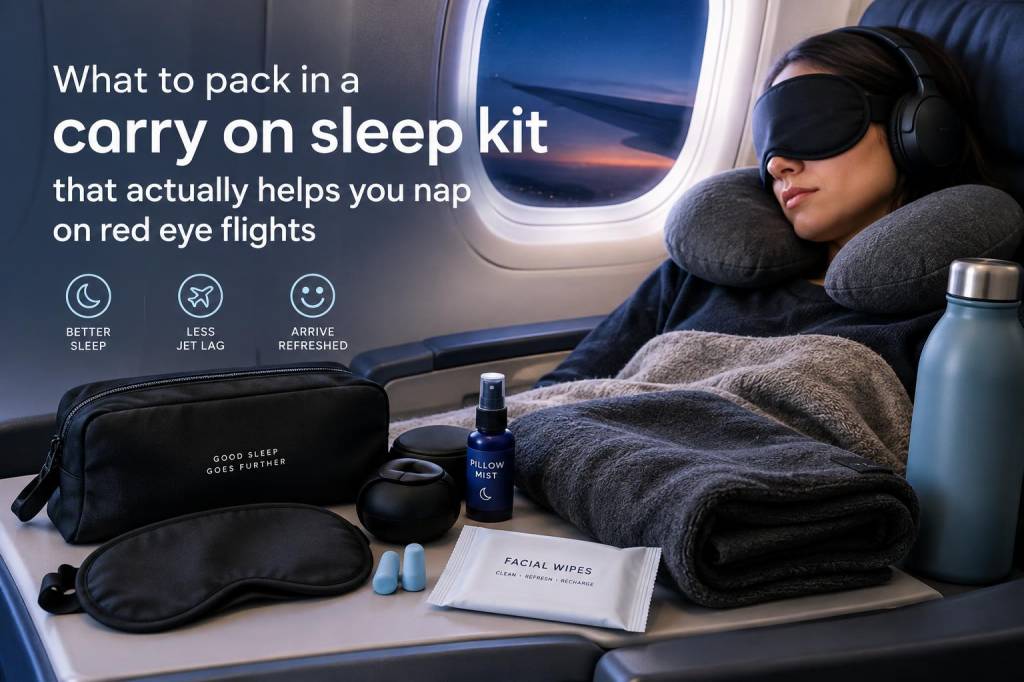
I used to dread red-eye flights — the buzzing cabin lights, the seat that never quite reclines, the passenger beside me who snores like a bassline. Over time I learned that the right carry-on sleep kit can make the difference between arriving cranky and arriving rested enough to function. Below I share what I actually pack in my carry-on for overnight flights, why each item matters, and a few practical tips for napping on a plane without turning it into a stress mission.
My guiding principle: comfort, control, and minimal bulk
When I pack for a red-eye I aim to control the things I can (light, noise, temperature, and comfort) and keep the kit light and compact. Think of the kit as small interventions that collectively signal your body it’s time to rest. None of these items promise a perfect eight-hour sleep, but together they create the right conditions for meaningful naps and deeper rest between wakeful periods.
What I always pack in my carry-on sleep kit
- Lightweight, supportive travel pillow — I prefer inflatable or memory-foam U-shaped pillows that compress small. Inflatable ones (like the Trtl or Sea to Summit Air) pack tiny but can still support my neck enough for 30–90 minute naps. A soft, washable cover adds comfort and hygiene.
- Contoured eye mask — Not all masks are equal. I use a molded mask (sometimes called a 3D contoured sleep mask) that doesn’t press on my eyes and blocks most light. A mask that fits well makes cabin lights and glow from screens much less disruptive.
- High-quality earplugs — Foam earplugs are cheap and effective; reusable silicone plugs are durable. For aircraft noise, I often combine earplugs with soft over-ear noise-cancelling headphones (see below).
- Compact noise-cancelling headphones or earbuds — I bring light ANC earbuds (Sony WF series, Apple AirPods Pro, or similarly compact options). They help reduce engine hum and cabin noise and let me listen to white noise, gentle music, or guided sleep meditations.
- Lightweight travel blanket or large scarf — Cabins fluctuate in temperature. A thin, packable blanket or a large scarf serves as both a cozy wrap and a pillow if needed. Cashmere feels luxurious but a microfiber travel blanket hits the sweet spot between warmth and packability.
- Hydration: refillable water bottle and a small electrolyte sachet — Hydration helps avoid grogginess on arrival. I fill an empty bottle after security. I keep a small electrolyte sachet or powder for long flights to replace minerals and reduce fatigue.
- Snack for steady blood sugar — A small protein-rich snack (nuts, a nut butter packet, or a protein bar) helps prevent sugar dips that can sabotage naps. I avoid sugary snacks that spike then crash my energy.
- Moisturizing face mist and lip balm — Cabin air is drying; a quick spritz and a swipe of balm make a big difference to comfort and sleep quality.
- Sanitizing wipes and small hand gel — I wipe down armrests, tray table and seatbelt buckle. Feeling clean relaxes me and helps me settle.
- Compression socks — They take up almost no room and help circulation on long overnight flights, reducing swelling and helping you feel less stiff when you land.
- Melatonin (optional) and any prescription meds — If I plan to intentionally shift my sleep, I sometimes use a low-dose melatonin (0.5–3 mg) to nudge my circadian rhythm. I always follow dosing guidance and never combine melatonin with alcohol or sedatives. Prescriptions like benzodiazepines or strong sleep meds are packed only if prescribed and discussed with a clinician.
Small but powerful extras
- Ear cover or disposable pillowcase — For hygiene, I use a thin disposable pillowcase or a washable cover for my pillow.
- Aromatic touch: lavender oil sample — A single drop on the mask edge or wrist can be calming. I use it sparingly and mind fellow passengers’ sensitivities.
- Blue-light dimming glasses — If I’m catching a nap after using screens, I swap to blue-light–blocking glasses to help my eyes relax.
- Phone charger and portable battery — Always. My sleep sounds or meditation app need juice if I’m relying on them.
- Seat-friendly lumbar roll — A small inflatable lumbar support can make upright sleeping much more comfortable.
How I use the kit on board
There’s more to napping on a plane than the items themselves. Here’s my step-by-step routine that helps me actually fall asleep:
- Choose a seat strategically — I aim for a window seat so I can lean my head against the cabin wall and avoid being disturbed by aisle foot traffic. If window isn’t available, I prioritize bulkhead or exit row where I can stretch slightly more.
- Set an intent and time limit — I decide whether I want a deep long sleep or a few 30–90 minute naps. Setting an alarm or using my phone’s sleep timer (with gentle sound) helps prevent oversleeping or grogginess.
- Create darkness and silence — I put on the eye mask and earplugs, then the ANC earbuds if needed. Darkness and noise reduction help my brain shift into rest mode even in an upright position.
- Use breathwork and a short guided meditation — I do 4–6 slow breaths or use a 10–15 minute guided body-scan meditation to relax muscles and lower heart rate.
- Layer clothing and test temperature — I add or remove layers until comfortable. If I’m cold, I wrap the blanket around my torso rather than my neck to avoid overheating.
What I avoid packing or doing
- Large, heavy pillows — Bulky items take up precious carry-on space and are awkward to manage in small seats.
- Alcohol to induce sleep — It may knock you out briefly but fragments sleep and increases dehydration.
- Loud fragrances or strong essential oil sprays — These can disturb neighbors; a touch on a personal item is kinder.
- Unfamiliar strong sleep meds without testing — Never try a new prescription or over-the-counter sedative for the first time on a flight.
Practical checklist (compact table)
| Item | Why |
|---|---|
| Inflatable/memory foam pillow | Neck support; packs small |
| Contoured eye mask | Blocks light without pressure |
| Earplugs + ANC earbuds | Reduce engine/cabin noise |
| Travel blanket/scarf | Temperature comfort; doubles as pillow |
| Refillable water bottle + electrolytes | Hydration and reduced post-flight fatigue |
| Protein snack | Stable blood sugar for consistent naps |
| Moisturizer & lip balm | Combat dry cabin air |
| Sanitizing wipes | Clean surfaces quickly |
| Compression socks | Improve circulation |
| Melatonin (optional) | Gentle sleep timing aid (use responsibly) |
These items fit into a small packing cube or the outer pocket of my carry-on and transform even the most basic flight into an opportunity to rest. Over the years I’ve learned to adapt: sometimes I use every tool, sometimes only a scarf and earplugs are necessary. The point is to bring a few portable comforts that respect your space and other passengers while giving you the best chance at meaningful in-flight sleep.