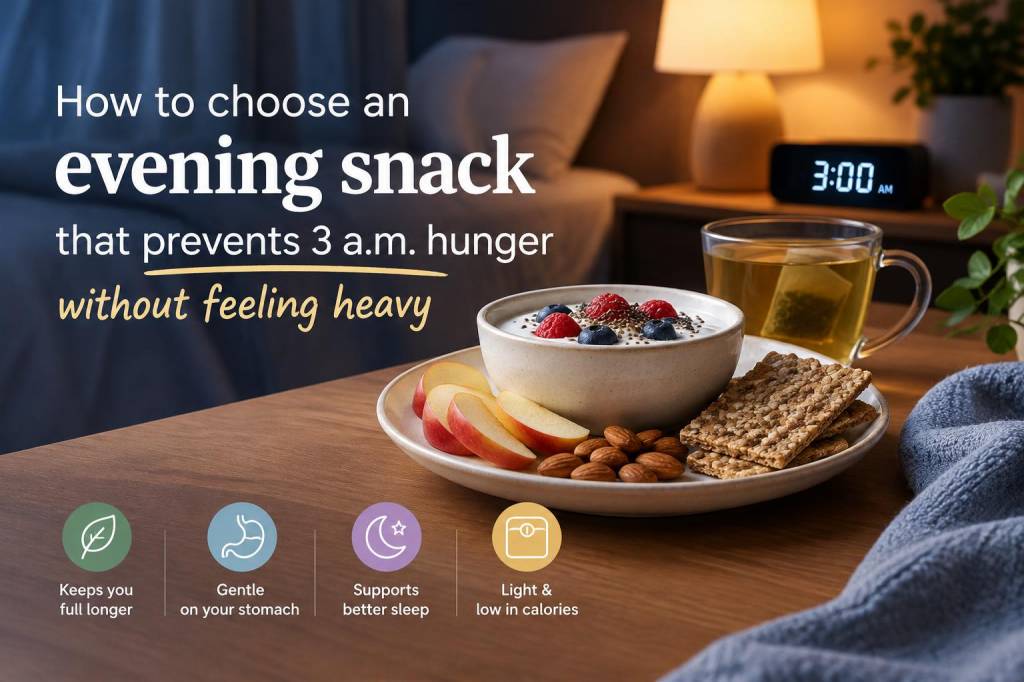
I used to think an evening snack was either a “good habit” or a “bad habit,” but real life is far more nuanced than that. If I eat nothing after dinner, I may wake up at 3 a.m. with a restless stomach and a mind that suddenly starts negotiating with itself. If I eat something too rich or too large, I can feel heavy, sluggish, and oddly uncomfortable right when I want my body to settle into sleep. Over time, I have learned that an evening snack can be genuinely helpful when it is chosen with a little intention.
For me, a satisfying nighttime snack is not about restriction or perfection. It is about noticing what my body actually needs before bed: a small amount of energy, enough protein or fiber to slow digestion, and a texture that feels calming rather than exciting. When I choose well, I sleep more peacefully, I wake less often, and I am far less likely to find myself hungry in the middle of the night.
Why nighttime hunger happens
Nighttime hunger is often a sign that dinner was not quite enough for my body, even if it looked balanced on paper. Some days I eat early, move more than usual, or simply go through a stressful stretch that raises my appetite. Sometimes I realize I have eaten lightly all day and only notice the gap once I slow down in the evening. That is one reason I no longer treat an evening snack as a failure. It can be a useful bridge between dinner and sleep.
There is also a practical side to this. Blood sugar tends to feel steadier when meals are spaced in a way that matches my day, and if dinner is too small or mostly refined carbohydrate, I am much more likely to wake hungry. I do not need a giant plate of food late at night to fix that. I usually need a snack that is modest, balanced, and easy to digest.
My personal rule is simple: if I am genuinely hungry, I eat. If I am bored, stressed, or looking for a reward, I try to pause first and notice that feeling. That distinction matters because a snack that supports sleep is very different from a snack that keeps me alert and reaching for more.
What a satisfying evening snack usually contains
The snacks that work best for me tend to include a mix of protein, fiber, and sometimes a little healthy fat. That combination helps me feel full without feeling stuffed. I also pay attention to portion size, because even a healthy snack can feel heavy if I make it too large too close to bedtime.
I think of it as a calming formula rather than a rigid recipe. A few examples of useful pairings are:
- Greek yogurt with berries
- Apple slices with almond butter
- Whole grain toast with nut butter
- Cottage cheese with cucumber or tomato
- Oatmeal made with milk and a little cinnamon
- A banana with a small handful of nuts
Each of these gives my body something steady without being overly stimulating. I also like that they are familiar, simple, and easy to prepare when I am already winding down for the night.
What I avoid when I want to sleep well
I am not interested in turning evening food into a list of forbidden items, but I have noticed that certain choices make it harder for me to feel settled. Very sugary snacks can leave me wanting more shortly after I eat them. Very salty, fried, or heavily spiced foods can make my body feel busy when I want it to feel quiet. Large servings of chocolate close to bedtime are not ideal for me either, since they can feel a little too energizing.
I also try to be cautious with snacks that are mostly refined carbohydrate and very little else. A plain biscuit or a bowl of cereal may be comforting in the moment, but if I am trying to prevent 3 a.m. hunger, I usually need something more sustaining. That does not mean I never eat those foods. It simply means I do not rely on them when I know I need overnight steadiness.
Caffeine is another factor I watch carefully. Even when it does not stop me from falling asleep, it can affect the quality of my sleep and leave me feeling less rested. That includes coffee, some teas, energy drinks, and even chocolate for more sensitive evenings.
My favorite snack combinations for different needs
Different evenings call for different choices, and I like having a few options ready instead of trying to decide when I am already tired. When I need something especially light, I choose fruit plus protein. When I need a little more staying power, I choose oats, toast, or yogurt with add-ins.
| Need | Snack idea | Why it works for me |
| Very light appetite | Kiwi with a few almonds | Small, simple, and easy to digest |
| Gentle fullness | Greek yogurt with berries | Protein plus natural sweetness |
| More lasting satisfaction | Toast with peanut butter and sliced banana | Carbohydrate, fat, and protein in one easy snack |
| Warm comfort | Small bowl of oats with milk and cinnamon | Soft texture and steady energy |
| When I want something savory | Cottage cheese with tomatoes and olive oil | Fresh, filling, and not too heavy |
What I have learned is that “evening snack” does not need to mean one perfect food. It is more about matching a snack to the moment, my appetite, and how close I am to sleep. A snack that feels right at 8 p.m. may feel too much at 10:30 p.m., and I try to respect that difference.
Portion size matters more than I used to admit
One of my biggest lessons has been that even nourishing food can feel heavy if I do not keep portions modest at night. My body usually wants enough to take the edge off, not enough to feel like another meal. That is why I often use a small bowl, a half sandwich, or a single piece of fruit with a protein source rather than assembling a full plate.
I also eat more slowly in the evening than I once did. Slowing down gives me time to notice when hunger is easing instead of automatically finishing everything in front of me. That simple pause has saved me from many uncomfortable nights.
If I am unsure whether I want a snack, I ask myself three questions: Am I truly hungry? Will a small snack help me sleep? Can I keep it light enough that I will still feel comfortable lying down soon after? Those questions help me choose with more confidence.
When a snack is more helpful than a bigger dinner
I used to think I should solve all hunger with dinner, but that is not always realistic. Some days my schedule gets stretched, dinner happens earlier than planned, or I simply do not have a strong appetite at that hour. In those cases, I find it kinder to eat a modest evening snack than to force myself into an oversized meal late at night.
This is especially true on days when I have been physically active, emotionally drained, or unusually busy. My body does not care that I had a “healthy” lunch if that meal was seven or eight hours ago. It needs fuel in a rhythm that makes sense. A snack can be a thoughtful adjustment, not a sign that I did something wrong.
I also notice that a planned snack reduces the chance of random grazing. When I decide in advance what I will eat, I am less likely to wander into the kitchen and assemble a chaotic mix of foods that leaves me neither satisfied nor sleepy.
A simple way I build an evening snack
My easiest method is to choose one item from each of three groups: a slow-digesting carbohydrate, a protein source, and something fresh or soothing. That might mean toast, yogurt, and berries; or oats, milk, and cinnamon; or apple, nut butter, and a few seeds. I do not need every snack to be nutritionally impressive. I just want it to feel balanced enough to support my night.
If I want to keep it very light, I reduce the portion and keep the same structure. A few spoonfuls of yogurt with fruit can be enough. If I am more hungry, I add a little more protein or fiber rather than just adding more sugar. That small adjustment usually makes the biggest difference in overnight hunger.
For me, the real question is not whether I should snack at night. It is whether I can choose a snack that helps my body settle, keeps my stomach comfortable, and gives me enough steady energy to stay asleep. When I keep that in mind, my evening food choices become much calmer, simpler, and more satisfying.