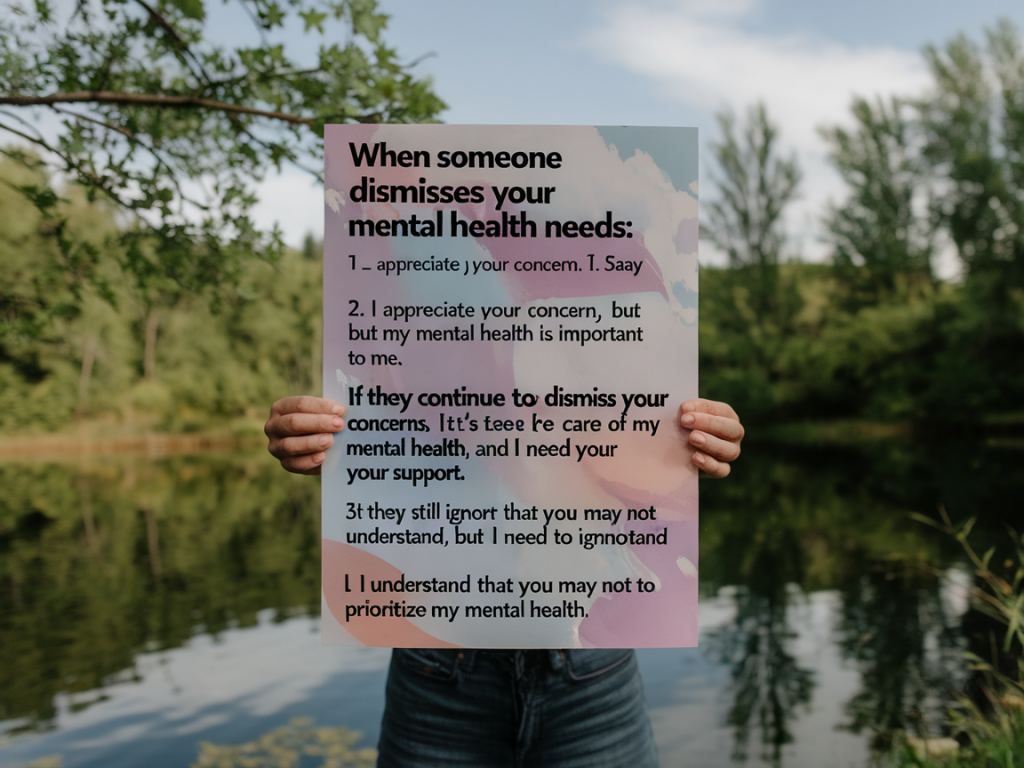
We’ve all been there: you bring up how anxious, depleted, or overwhelmed you’ve been, and someone replies with a pat dismissal—“It’s not that bad,” “You’re overreacting,” or “Just get out more.” Those responses can hush you, make you doubt yourself, and crank your nervous system into fight, flight, or freeze. I’ve felt that sting more times than I can count. Over the years I’ve learned that having a few short, gentle scripts ready helps me hold my boundaries, protect my wellbeing, and come back to calm—without escalating the situation or carrying extra emotional labour.
Why short scripts help
When emotions are high, our brains lean towards automatic reactions—apologising, over-explaining, or retreating. Short scripts do three things for me:
- Create clarity: They say what I need without opening a long debate.
- Protect energy: They stop me from getting pulled into convincing or justifying myself.
- Regulate my nervous system: Having a prepared response reduces adrenaline and helps me move back toward calm.
I like scripts that are brief, kind, and firm. They don't aim to change the other person—they aim to preserve my inner balance.
How I choose which script to use
Before using one, I do a quick internal check: am I safe? Is this person someone I want to maintain a relationship with? Do I need to explain or simply to be heard? If I’m feeling cornered or invalidated, I prioritise scripts that close the conversation gently. If the other person seems open to learning, I might use a slightly longer, educational line.
Three short scripts I use (and how to say them)
Below are three scripts I’ve tested in real conversations. Say them quietly and steadily—tone matters more than volume. Pause briefly after speaking to let the message land.
Script 1: The Boundary Pause (for quick dismissals)
“I hear you. I need to step away from this conversation right now.”
Why it works: It acknowledges the other person without agreeing, and gives you permission to leave. Use this when someone invalidates your feelings or insists you’re overreacting. You don’t owe an explanation; you owe your emotional safety.
How I use it: I take a breath, say the line slowly, and physically change location—make tea, step outside, or go to another room. That movement helps my nervous system move out of reactivity.
Script 2: The Short Educator (for curious but dismissive people)
“I get that it can seem that way. For me, this feels real and hard. I’d appreciate being heard.”
Why it works: It keeps the door open and invites empathy without launching into a lecture. It’s useful with people who aren’t hostile but who minimise because they don’t understand.
How I use it: I use this when I want connection and when the other person might genuinely empathise if given the chance. Often that small nudge—“I’d appreciate being heard”—is enough to shift the tone.
Script 3: The Calm Fact (for people who insist on “fixing” you)
“This is not a mood I can ‘snap out of’. I’m managing it with my healthcare plan, and I’d prefer support, not solutions.”
Why it works: It sets a boundary against unsolicited advice and signals that you’re taking responsible steps. It’s particularly helpful with well-meaning friends or family who default to “just try X” responses.
How I use it: I say it succinctly and, when needed, follow with a short request: “If you’re unsure what would help, a kind check-in or a cup of tea is enough.” That gives people an actionable way to be supportive without overstepping.
Practical nervous-system tools to pair with scripts
Words protect the conversation; body-based tools protect you afterward. I like to follow up a difficult exchange with simple practices that anchor me:
- 4-4-6 breathing: Inhale 4 counts, hold 4, exhale 6. Repeat 4 times. It gently activates the parasympathetic system.
- Grounding touch: Place a hand on your chest or the back of your neck—this simple contact sends a signal of safety.
- Short walk: Even five minutes outside can reset my mood. Nature, movement, and rhythm help the nervous system recalibrate.
- Micro-self-care: Make a warm drink, light a candle, or listen to a calming track on apps like Calm or Headspace for two tracks focused on breathing.
When someone pushes back
Sometimes a script will be met with further minimisation: “You’re too sensitive” or “You’re making a big deal.” If that happens, I step down my need to persuade. I might repeat a short line: “I’m not asking for permission to feel. I’m asking for respect.” If they continue, I keep my distance until I feel safe engaging again.
What to do if you feel guilty for setting boundaries
Guilt is common, especially if you were raised to put others first. I remind myself of a few facts:
- My feelings are valid; saying so is not selfish.
- Boundaries teach others how to treat me.
- Restoring my balance helps me be more present for the people I care about.
I also use a short self-compassion phrase: “I’m allowed to protect my wellbeing.” Saying that out loud feels small but steadying.
Making scripts your own
These phrases are starting points. You can adapt the tone, language, or length to your personality. If you prefer humour, soften a line with a light comment. If you want to be more formal, tweak the language accordingly. The key is repetition—practise them quietly when you’re calm so they come easily in the moment.
If you’d like, here’s a tiny practice to rehearse them: stand in front of a mirror, take three grounding breaths, and say each script out loud once. Notice how your body feels. Over time, the confident, calm energy of those words becomes part of your instinctive response.
Holding boundaries around mental health isn’t about cutting people out; it’s about giving yourself the space to heal and breathe. Short, kind, firm scripts are a small tool that protect your inner life while keeping the door open to more compassionate conversations when you’re ready.