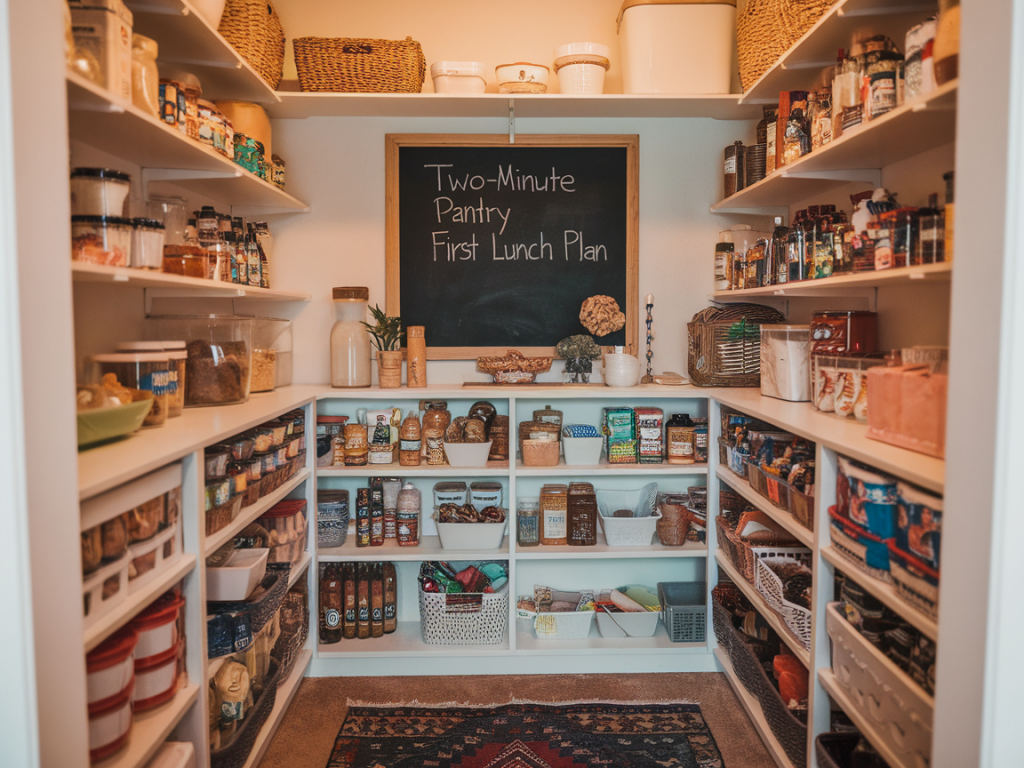
I’ve long been a fan of simple habits that plug straight into busy days — practices that don’t require a shopping trip, special equipment, or a long prep time. One of the most helpful rituals I return to again and again is a two-minute pantry-first lunch plan. It’s exactly what it sounds like: a quick framework that helps you assemble a satisfying, mood-stabilising lunch from what you already have at home. For me, this small habit has reduced afternoon anxiety and made it easier to sustain focus without resorting to sugary snacks or feeling drained mid-meeting.
Why a pantry-first approach helps anxiety and focus
When I skip planning or wait until I’m starving, my decision-making gets foggy and I reach for the easiest but often least nourishing option. That’s when anxiety spikes — the body perceives low fuel and stress hormones rise — and concentration takes a hit. Choosing a pantry-first approach removes decision friction: you don’t need a long recipe or fresh groceries, just a predictable routine that delivers balanced nutrients quickly.
In two minutes you can combine protein, fibre, healthy fat and some complex carbs, which together help steady blood sugar and support steady energy. That balance reduces the cortisol and adrenaline rollercoaster that can make afternoons jittery, and it improves cognitive function so you can return to work feeling clearer.
How to build your two-minute pantry lunch habit
Think of this as a flexible formula rather than a strict recipe. I always keep a small checklist in my head so that in two minutes I can pull items and assemble a plate or bowl. The formula is:
With these four elements you’re rarely more than two minutes from a balanced meal. The goal is to make the default easy and nourishing.
Practical two-minute combos I use
Below are a few combinations I reach for often. I rotate these depending on what’s in my pantry and how hungry I am.
Pantry staples to keep on hand
Here’s a compact table of pantry-friendly items that make the two-minute plan possible. These are the basics I recommend keeping stocked — nothing fancy, just reliable and shelf-stable or long-lasting.
| Proteins | canned tuna/sardines, canned chicken, canned beans, lentils, shelf-stable tofu, nut butters, Greek yogurt (if refrigerated) |
| Fibre bases | wholegrain crackers, rice cakes, instant brown rice, pre-cooked quinoa pouches, oats |
| Healthy fats | olive oil, tahini, jarred pesto, nuts, seeds, avocado (when available) |
| Veg/Flavor boosters | jarred roasted peppers, olives, capers, pickles, salsa, sun-dried tomatoes, frozen peas |
| Quick carbs/snacks | wholegrain wraps, pita, crispbreads, granola, fruit preserves |
Common questions I hear — and my answers
Tips to make the habit stick
When I adopt this pantry-first ritual, I notice a quieter mind in the afternoon and less fluctuation in energy. The simplicity is what makes it sustainable: you’re less likely to skip lunch, less likely to grab processed sugary snacks, and more likely to feel capable of returning to work with focus. If you try it, start with the staples list and pick three favourite combos — rotate those for a week and see how your afternoons feel. Small routines like this have a way of quietly supporting bigger shifts in wellbeing.