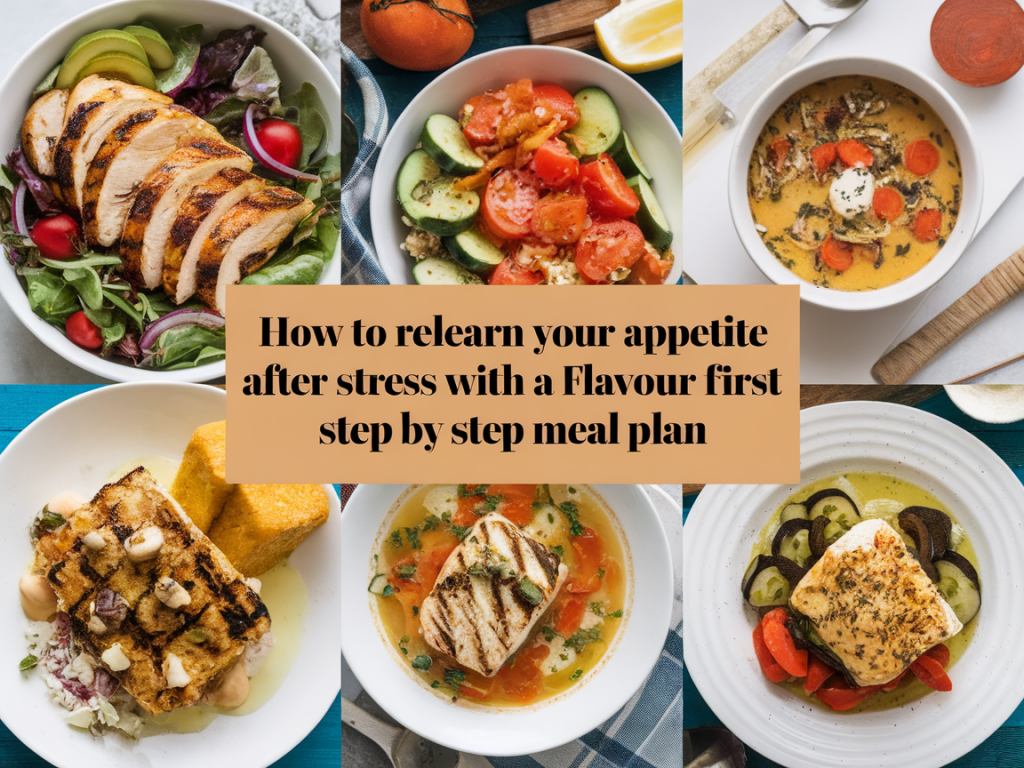
After a long period of stress—be it a busy season at work, caregiving, or an unexpected life event—your appetite can feel foreign. Meals may seem heavy or unappealing, or you might reach for quick snacks without really tasting them. I’ve been there, and over the years I’ve developed an approach I call flavour-first relearning. It’s gentle, practical and focuses on rebuilding appetite by bringing pleasure, variety and tiny routines back into your eating, rather than forcing “eat more” or rigid rules.
Why stress changes appetite (and why patience matters)
Stress affects hunger hormones, digestion and the part of your brain that associates food with pleasure. Cortisol and adrenaline can suppress appetite in the short term; chronic stress may make you crave high-sugar or high-fat foods. Importantly, your body’s signals can become muted or noisy, which makes it hard to tell whether you’re actually hungry, thirsty, bored or exhausted.
Relearning appetite isn’t about willpower. It’s about reintroducing positive, low-pressure experiences with food so your body and brain remember how to enjoy and respond to eating. That’s where a flavour-first, step-by-step meal plan comes in: it prioritises taste, ease and small wins to re-sensitise appetite.
The flavour-first principle
Flavour-first means building meals around taste elements that quickly register as enjoyable—salt, acid, umami, texture and aroma—while keeping portion sizes modest and sensory. When something smells and tastes appealing, eating becomes less of a chore and more of a remembered pleasure, which helps appetite return.
Key principles I use:
- Start small: Small plates and bite-sized portions reduce overwhelm.
- Prioritise sensory contrast: Include crunchy vs soft, tangy vs rich.
- Use favorites and experiment: Mix a loved flavour with a new one (e.g., honey + lemon on yoghurt).
- Hydrate with intention: Flavoured drinks (herbal teas, warm lemon water) can ease nausea and open appetite.
- Ritualise the start: A short pre-meal routine—five deep breaths, lighting a candle, or smelling a sprig of rosemary—signals safety and invites appetite.
How to use this step-by-step meal plan
This plan spans seven days and is flexible: you can repeat days, swap meals, or use elements as snacks. Each day focuses on flavorful, small meals that are easy to prepare. The goal is to eat regularly (every 3–4 hours), but only as much as feels comfortable. If a meal feels like too much, save half for later. Keep a notebook and jot one line after each meal: “how it felt” (e.g., lighter, more interested, still full). That helps track progress without obsessing over calories.
7-day flavour-first, appetite-relearning meal plan
| Day | Breakfast | Lunch | Snack | Dinner |
|---|---|---|---|---|
| Day 1 | Greek yoghurt (small pot) with a drizzle of honey, lemon zest and toasted seeds | Open sandwich: sourdough slice, smashed avocado with lime and flaky salt, cherry tomatoes | Warm herbal tea (peppermint) and a small oat cookie | Comfort bowl: miso broth with soft tofu, spinach and spring onion (umami + warmth) |
| Day 2 | Warm porridge with cinnamon, a spoonful of nut butter and sliced banana | Mixed salad: baby leaves, smoked salmon or chickpeas, capers, lemon dressing | Apple slices with a smear of peanut butter | Roasted sweet potato wedges, tahini drizzle, toasted seeds and a small green salad |
| Day 3 | Smoothie: kefir or milk alternative, frozen berries, banana, spoon of oats | Rice bowl: leftover grains, roasted veg, a fried egg and soy sauce + sesame | Yoghurt with a spoon of jam or compote | Simple pasta with olive oil, garlic, chilli flakes and parmesan; side of steamed broccoli |
| Day 4 | Toast with ricotta, honey and crushed pistachios | Warm lentil soup with lemon and parsley (serve small bowl) | Fruit and a few dark chocolate squares (70%) | Grilled fish or halloumi, quinoa and a zingy herb salsa (coriander/parsley + lemon) |
| Day 5 | Overnight oats with orange zest and toasted coconut | Wrap: hummus, roasted pepper, cucumber and spinach | Carrot sticks and tzatziki | Stir-fry: colourful veg, tamari, crushed garlic, sesame oil and toasted cashews |
| Day 6 | Poached egg on a small toasted muffin, hot sauce if liked | Leftover stir-fry or grain salad with pickled onion for brightness | Slice of cheese and oat biscuits | Hearty stew (small bowl) with root veg and a swirl of crème fraîche or plain yoghurt |
| Day 7 | Fruit salad with a squeeze of lime and a sprinkle of toasted seeds | Small plate mezze: olives, sliced cucumber, hummus, flatbread pieces | Warm milk (or oat) with honey and a pinch of cinnamon | Comfort favourite: choose a simple meal you love—think curry, risotto or a favourite takeaway—served in controlled portions |
Notes: Aim for colourful plates and include something tangy (lemon, pickles), something salty (salt, soy, capers) and something fatty (olive oil, nut butter) to activate taste buds. Use ready-made items (store-bought miso paste, pre-cooked grains, or a quality hummus like Sabra or Meridian) to lower effort. If chewing feels hard, prioritize smoothies and broths.
Micro-rituals to bring appetite back
Small routines around eating help tell your nervous system it’s safe to eat:
- Before each meal: take five slow breaths, tune into your senses and notice one thing you’re curious to taste.
- Light a candle or play a 2–3 minute calming playlist (I like gentle acoustic tracks) to create a pleasant environment.
- Use smaller plates or bowls—this reduces intimidation and helps you finish portions comfortably.
- Sip warm water or herbal tea 10–15 minutes before a meal to ease nausea and open the digestive tract.
How to check in with your hunger cues
Learning to sense hunger again is a gradual process. Try this quick three-question check a few times a day:
- Am I physically hungry (stomach sensations, light-headed, low energy)?
- How urgent is the hunger on a 1–10 scale?
- What flavour or texture am I drawn to right now?
If you’re not sure, choose a small, flavourful option from the plan and eat mindfully without judgement.
Troubleshooting common hiccups
If you feel full quickly: eat smaller, more frequent portions and add an appetiser like a few olives or a spoonful of miso soup before the main dish.
If meals feel bland: add a simple condiment—squeeze of lemon, sprinkle of sea salt, drizzle of chili oil, or a spoonful of store-bought pesto.
If nausea is present: choose cold or room-temperature foods (yoghurt, smoothies, crackers) and avoid strong smells until tolerance improves.
When to reach out for extra support
If you’re losing more than a few kilos unintentionally, feeling faint, or your relationship with food is causing distress, please contact a healthcare professional. A dietitian, GP or mental health practitioner can offer tailored support. Relearning appetite is often emotional as well as physical—if anxiety or low mood are dominant, counseling or brief therapies such as CBT-MBSR-informed approaches can be very helpful.
Eating again after stress is a gentle reclaiming of everyday pleasure. Start small, follow your senses, and let flavour lead the way.