I travel fairly often for work, and sometimes a one-night trip is unavoidable: a late meeting, an early flight, or a client dinner that runs late but you absolutely can't miss the following day. Over time I've learned that packing a tiny, sleep-friendly carry-on can make the difference between arriving exhausted and actually feeling rested enough to do good work. Below I share the compact kit I always pack when I want to support sleep and quick restoration on a short trip—no extra luggage, no complicated rituals, just practical items and small habits that help me land the next day feeling clearer and calmer.
My mindset for a one-night restorative trip
Before listing items, a quick note on approach: I aim for simplicity and usefulness. I don't try to recreate a whole bedtime routine in a hotel room. Instead I focus on 3 priorities: reducing sensory disruption (light, noise), supporting comfort (neck, warmth, hydration), and nudging my nervous system toward rest (breath, scent, gentle rituals). With those priorities, you can pack light and still make a big impact on sleep quality.
Carry-on essentials I always include
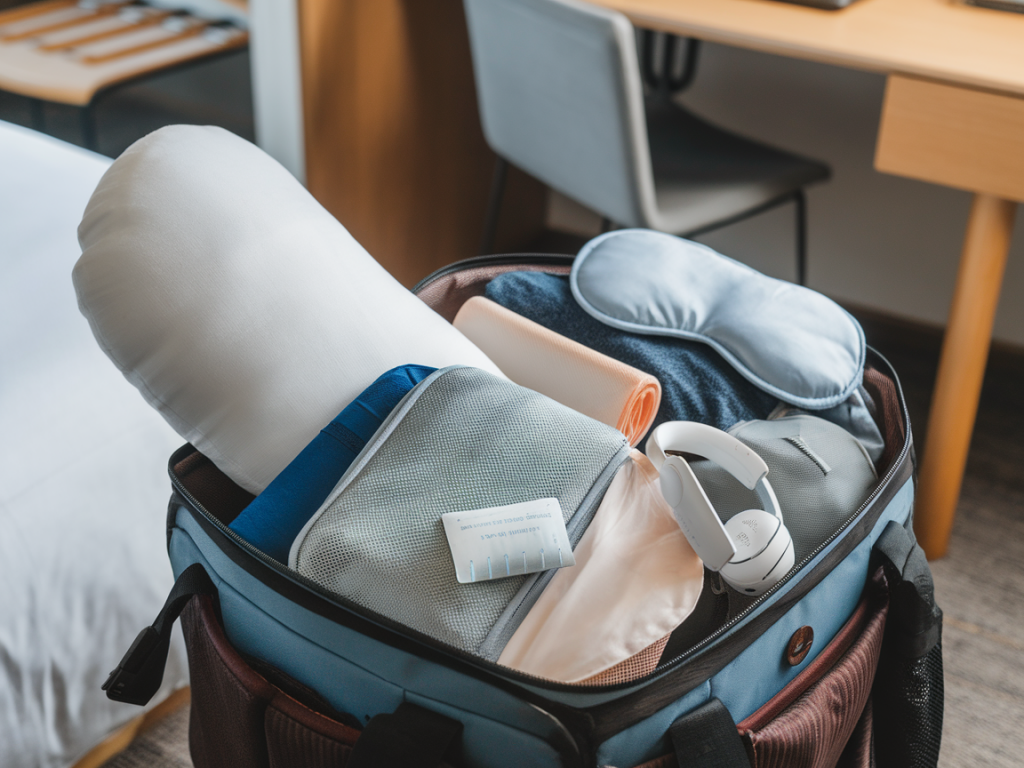
- Compact travel pillow: A small memory foam or inflatable neck pillow (e.g., Cabeau or a slim memory foam option) that fits in my carry-on. I use it on flights and also as lumbar support in a strange chair—comfort matters for quick rest.
- Lightweight blanket or large scarf: A thin, breathable wrap (merino or cotton blend) doubles as a blanket or extra pillow. I often use a large scarf from Uniqlo or a packable travel blanket—keeps me warm without taking much space.
- Sleep mask: A padded, contoured sleep mask (I like the ones with extra nose coverage) to block hotel hallway lights or a bright early-morning sunbeam. Look for one that doesn't press on your eyes.
- Earplugs + optional noise-cancelling earbuds: Foam earplugs for instant sound reduction, and compact noise-cancelling earbuds (Bose or Sony) when I expect plane engine noise or thin hotel walls. Even simple silicone earplugs can transform sleep quality.
- Hydration bottle: A small refillable bottle (500 ml). I prefer stainless steel with insulation—keeps water cool and encourages sipping before bed and first thing in the morning.
- Moisturiser and lip balm: Flights and air-conditioned hotel rooms dry me out. A travel-size facial moisturiser and lip balm keep me comfortable and reduce that chapped, restless feeling.
- Basic toiletries and oral care: Toothbrush, toothpaste, handwash or sanitiser, and a tiny facial wipe. A quick refresh before bed—wash face, brush teeth—helps signal sleep time to my brain.
- Comfortable sleepwear alternative: I pack a lightweight, soft top or oversized tee that can double as sleepwear. If I’m staying in a business trip outfit, changing into something soft signals the brain that day is done.
- Portable diffuser or sleep spray (optional): A travel-sized lavender pillow spray (e.g., This Works Deep Sleep pillow spray) or a tiny essential-oil roller (lavender or bergamot) to dab on pulse points. I use scent sparingly—just a light cue for calm.
- Eye drops: Simple lubricating drops help if my eyes feel gritty from travel or screens; feeling physically comfortable contributes to falling asleep faster.
- Minimal tech with a charging plan: I keep my phone and charger, but also a simple sleep playlist or white-noise app downloaded offline. If possible I switch my phone to Do Not Disturb and set a gentle alarm rather than relying on a buzzing device all night.
Small extras that make a big difference
- Compression socks: For long flights or train rides, they reduce swelling and increase comfort, which helps me relax faster when I recline to rest.
- Melatonin (low dose) or magnesium supplement (if that's part of your usual routine): I sometimes use a very low dose of melatonin for time-zone shifts or nights when sleep will be brief, but only if it suits me and I know how my body responds. Magnesium glycinate can help with muscle relaxation. Always follow guidance from your healthcare provider.
- Simple bedtime snack: A small portion of protein + complex carbohydrate—think a banana with a handful of almonds or a small pot of Greek yoghurt. It stops hunger-driven wakefulness without feeling heavy.
- Portable reading light: A tiny LED clip-on lamp for reading—less jarring than overhead hotel lights and easier to control.
How I use these items in practice
Here’s a practical order I follow when I arrive and want to prioritise rest before an important workday.
- Set the environment: Immediately set up the sleep mask, earplugs, and blanket/scarf. I close curtains, switch off unnecessary lights, and position the pillow for neck support.
- Hydrate and freshen: I sip water, wash my face, brush my teeth and apply moisturiser—these small rituals help create a boundary between travel mode and sleep mode.
- Use scent and breathing: I spray a light mist of lavender or roll a gentle blend onto my wrists. Then I do a 3–5 minute breathing cycle—inhale for 4, exhale for 6—this calms the nervous system.
- Limit screens and bright light: I switch phone to Do Not Disturb and avoid social media. If I need to work a little, I set a strict 20–30 minute cap, then step away and prepare to sleep.
- Snack if needed: If I’m peckish, I eat the light snack 30–60 minutes before bed to avoid going to bed hungry or too full.
- Use sound intelligently: If the room is noisy, I turn on downloaded white noise or calming soundscapes at a low volume. If it's quiet and my mind is loud, I play a short guided body scan to move attention away from anxious thoughts.
A pocket checklist (quick table for packing)
| Comfort | Travel pillow, blanket/scarf, soft top |
| Light & noise | Sleep mask, earplugs, noise-cancelling earbuds |
| Hydration & nourishment | Water bottle, small snack |
| Ritual & scent | Lavender spray or roller, breathing plan |
| Practical care | Moisturiser, lip balm, toothbrush, eye drops |
| Optional | Melatonin/magnesium, compression socks, reading light |
I keep this kit compact and adaptable. Some items I only use when needed (melatonin, white noise), others are non-negotiable (mask, earplugs, water). The point is not perfection, but giving yourself the best chance to rest in less-than-ideal circumstances. If you’re packing light, choose multi-use items (e.g., a scarf that’s also a blanket) and prioritise what calms your body and mind quickly.
If you try this kit, tweak it to suit what helps you sleep fastest—some people swear by weight (a light blanket), others by scent or sound. Small swaps can make your pack even more efficient. Safe travels, and may your one-night trips become genuinely restorative rather than another source of fatigue.