Evening light has a surprisingly big effect on how easily we fall asleep. Over the years I’ve experimented with everything from blue-light filters on my phone to swapping every bulb in my flat, and I’ve learned that small, consistent changes make the biggest difference. Below I share a simple, practical lighting plan you can adapt to your home—covering bulbs, screens and a gentle 3-step wind-down routine that helps signal to your body it’s time to rest.
Why light matters for sleep (quick science)
Our bodies follow a circadian rhythm—an internal clock regulated in part by light. Bright, blue-rich light (like daylight or many LED screens) tells our brain it’s daytime and suppresses melatonin, the hormone that helps us feel sleepy. In the evening, dimmer, warmer light supports melatonin production and helps our nervous system shift toward rest.
That doesn’t mean you must live by candlelight. It’s about reducing intensity and blue content in the couple of hours before bed so your physiology can prepare for sleep naturally.
My three-zone approach to evening lighting
I find it helpful to think of the home in three lighting zones as evening approaches:
Each zone benefits from different bulbs and strategies. The following table gives a snapshot you can use when choosing bulbs or adjusting fixtures.
| Zone | Suggested bulb type | Approx. colour temp | Notes |
|---|---|---|---|
| Primary living area | Warm LED, dimmable | 2200–2700K | Soft ambience; use lamps instead of overhead bright lights |
| Task areas | Warm LED with adjustable intensity | 2700–3000K | Keep brighter for cooking/reading, but avoid very blue tones late evening |
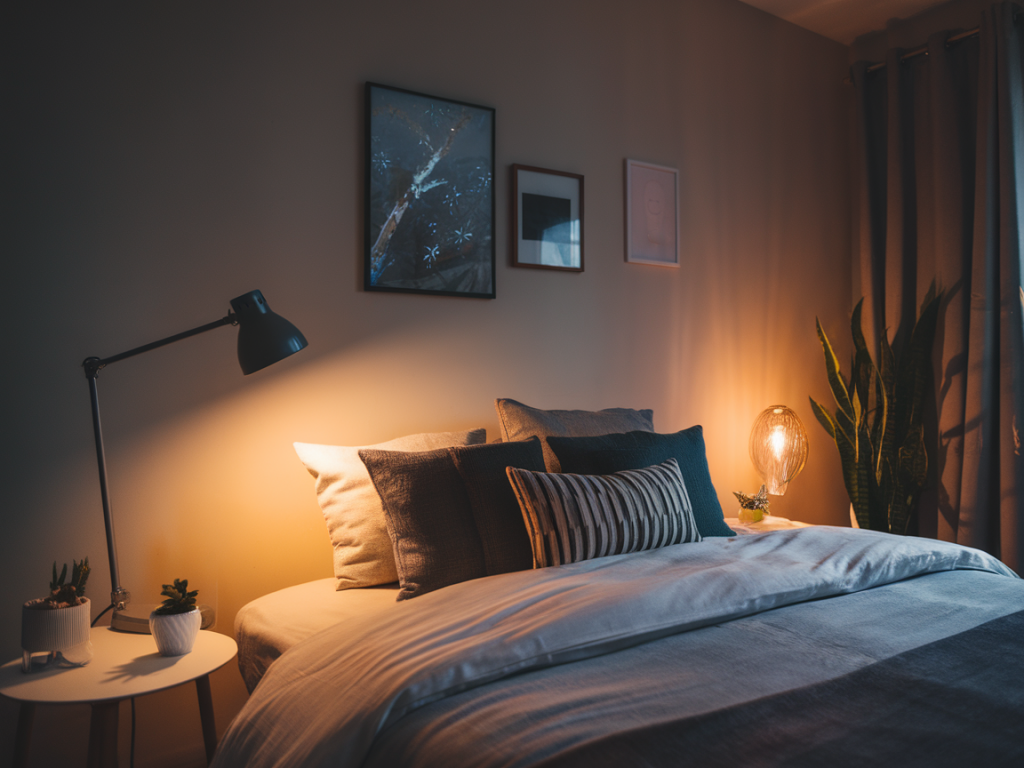
| Bedroom & transition | Very warm LED or amber/red bulbs | 1800–2200K | Lowest intensity; consider motion-activated low lights for bathrooms |
Choosing bulbs: what to buy and what to avoid
When shopping, look for bulbs that list a warm colour temperature (measured in Kelvin). The lower the number, the warmer the light. I keep a small stock of bulbs I trust: Philips Hue White Ambiance offers dimming and warm-to-cool control if you want smart features; for a low-tech option I like warm-dimmable LED bulbs that reach 2200K for a cosy glow. There are also specialty amber or red bulbs marketed for sleep-friendly lighting—these are great for bedside lamps.
Avoid bulbs labeled “cool white,” “daylight,” or those with temperatures above 4000K in evening spaces. Also, cheap LEDs can sometimes emit a harsh blue spike; if a bulb looks unnaturally white or harsh, swap it.
Screens: practical rules that actually work
Screens are often the hardest habit to change. I’m realistic: I use my phone and laptop in the evenings. The goal is to reduce the alerting blue light without turning your life upside down.
My simple 3-step wind-down (the plan I actually follow)
This routine is short, flexible and designed to be sustainable. I recommend starting it 60–90 minutes before your intended bedtime.
Small adjustments that add up
Here are a few practical tweaks I’ve found useful and that I recommend trying one at a time:
Common questions I get
Will changing bulbs really help if I’m anxious? Light helps, but it’s one piece of the puzzle. Pair lighting changes with calming evening habits—breathing, journaling or a short mindfulness practice—to address the body and mind together.
What if I live in a small studio? Focus on dimmable lamps and bulbs. Use a single warm lamp near your bed or seating area and keep overheads off.
Are smart bulbs worth it? They can be. I use Philips Hue for convenience: I can schedule a warm dim automatically and sync it to sunset. But you can get similar benefits with non-smart warm bulbs and a few manual switches.
Creating a sleep-friendly evening lighting plan doesn’t require a full home makeover. Start with one change—swap a bulb, dim an overhead light, or set your phone to night mode—and build from there. Over time those small choices create an environment that gently supports rest, making bedtime feel less like a production and more like a natural, calming routine.